
 Get Quote Now
 Call Now
The 31st January 2026 self-assessment deadline has passed. If you’re reading this and haven’t yet filed your tax return, you’re not alone, but you do need to act immediately. Every day you delay increases the penalties and compounds the problem.
At Integra, we help clients who’ve missed the deadline navigate this stressful situation every year. Whilst missing the deadline isn’t ideal, it’s not catastrophic if you act quickly and correctly. Let’s explore exactly what you need to do right now.
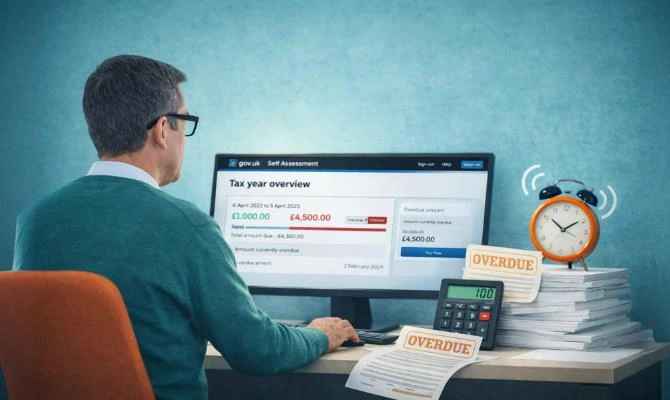
What penalties have you already incurred?
Understanding the penalty structure helps you grasp the urgency of filing immediately.
Immediate £100 penalty: You’ve already incurred an automatic £100 late filing penalty the moment 31st January passed. This applies regardless of whether you owe any tax, even if HMRC owes you a refund, the £100 penalty stands.
Daily penalties from 1st May: If you still haven’t filed by 1st May 2026 (three months after the deadline), HMRC adds £10 per day penalties, up to a maximum of £900. That’s 90 days of daily charges adding £900 to your bill.
Six-month penalties from 1st August: If your return remains unfiled by 1st August 2026, HMRC charges 5% of the tax due or £300, whichever is greater.
Twelve-month penalties from 1st February 2027: After twelve months, another 5% of tax due or £300 penalty applies, whichever is greater. In serious cases involving deliberate withholding, penalties can reach 100% of tax owed.
Interest on unpaid tax: Beyond penalties, HMRC charges interest on any tax owed from 1st February 2026. Currently, the rate is around 7.75% annually, accruing daily.
The mathematics is brutal. A £2,000 tax bill left unpaid with maximum penalties could become £4,000+ within a year. The only way to stop this escalation is filing immediately.
Your Immediate Action Plan
Don’t waste time feeling guilty or anxious, take action today.
Step 1: File your return immediately (today if possible)
Even if you don’t have all your documentation perfectly organised, file as soon as possible. You can amend the return later if needed, but getting something submitted stops the penalty clock ticking towards those daily £10 charges.
Gather the information you have, bank statements, income records, major expense receipts. The HMRC online system guides you through each section. If you’re genuinely unsure about specific figures, use your best estimates based on available information, then file.
Step 2: Pay what you can afford now
If you owe tax, pay whatever you can immediately, even if you can’t pay the full amount. This reduces the interest charges accruing daily. Every pound you pay now saves you interest charges going forward.
Step 3: Contact HMRC about payment arrangements
If you can’t pay your full tax bill immediately, HMRC offers Time to Pay arrangements allowing you to spread payments over up to 12 months. You can set these up online if you owe less than £30,000 and are up to date with tax returns.
To arrange Time to Pay online, log into your HMRC account, view your self-assessment statement, and select the payment plan option. You’ll see what monthly payments HMRC will accept based on your tax owed.
For debts over £30,000 or more complex situations, call HMRC’s payment support service. They’re generally more accommodating than people expect, especially if you’re proactive about contacting them.
Important: Interest still accrues on outstanding balances even with payment plans, but you avoid additional penalties for non-payment if you stick to the agreed schedule.
Can you appeal the £100 penalty?
Possibly, but only if you have a reasonable excuse for late filing. HMRC defines reasonable excuses quite strictly, it must be something unexpected and outside your control that prevented filing on time.
Acceptable reasonable excuses might include:
- Serious illness or hospitalisation prevents you from dealing with tax affairs.
- Death of a partner or close family member shortly before the deadline.
- Computer or system failure that genuinely prevented online filing despite trying.
- Fire, flood, or theft of records immediately before the deadline.
- Postal delays for paper returns (if you can prove posting in time)
Not acceptable as reasonable excuses:
- Being busy or forgetting the deadline.
- Not knowing about the deadline.
- Relying on someone else to file and they didn’t.
- Finding the online system difficult to use.
- Not having enough money to pay the tax (this might excuse payment penalties but not filing penalties)
If you believe you have a reasonable excuse, you must appeal within three months of receiving the penalty notice. Log into your HMRC account, find the penalty, and select ‘appeal penalty charge’. Explain your circumstances clearly and provide supporting evidence (medical certificates, death certificates, police reports, etc.).
However, be realistic, most late filings don’t qualify for reasonable excuse appeals. If you simply procrastinated or didn’t prioritise the deadline, HMRC won’t accept your appeal. Filing immediately and moving forward is more productive than hoping for penalty cancellation.
Gathering your documentation quickly
You need to file fast, but you also need to file accurately. Here’s how to gather essential information quickly:
Income records: Check your bank statements for all deposits during the 2024/25 tax year (6th April 2024 to 5th April 2025). Total these as your income starting point. If you have invoicing software or accounting records, pull reports for that period.
Business expenses: Review bank and credit card statements for business purchases. Major categories include:
- Premises costs (rent, utilities, business rates)
- Travel costs (fuel, parking, public transport, mileage)
- Office costs (supplies, software, equipment)
- Professional fees (accountancy, legal, subscriptions)
- Marketing and advertising
- Staff costs if you employ anyone
Don’t obsess over perfection. If you can’t find every single receipt, estimate reasonably based on what you can verify. It’s better to file with reasonable estimates you can later amend than to delay further.
Other income sources: Check for:
- Employment income (check P60 or P45)
- Rental income (review letting agent statements or tenant payments)
- Investment income (dividend vouchers, bank interest statements)
- Foreign income
- Capital gains from asset sales
Tax already paid: Include PAYE deducted from employment, tax credits on dividends, and any payments on account you’ve already made.
Tax-saving opportunities you can still use
Whilst you’ve missed the deadline for the 2024/25 return, you can still take advantage of tax-saving opportunities for 2025/26 before the 5th April 2026 tax year-end.
Personal pension contributions: Contributing to a personal pension before 5th April 2026 reduces your 2025/26 taxable income. For higher-rate taxpayers, every £100 contributed costs just £60 after tax relief, with an additional £20 claimable through next year’s self-assessment.
ISA allowances: Maximise your £20,000 ISA allowance for 2025/26 before 5th April. Whilst this doesn’t affect your current self-assessment, it’s part of smart tax planning.
Capital Gains Tax planning: Your annual CGT allowance (£3,000 for 2025/26) is use it or lose it. If you’re planning to sell assets, consider whether timing before or after 5th April makes sense.
Charitable donations: Gift Aid donations made before 5th April 2026 can be claimed on your 2025/26 return, extending your basic rate tax band and potentially saving higher-rate tax.
Should you get professional help now?
If you’re overwhelmed, confused about what to include, or concerned about making errors that trigger HMRC enquiries, professional help might be your best investment.
Professional accountants can:
- File your return quickly and accurately.
- Maximise allowable expenses you might miss.
- Ensure proper categorisation reducing enquiry risk.
- Handle communication with HMRC about penalties and payment plans.
- Provide tax planning advice for future years.
- Represent you if HMRC opens an enquiry.
At Integra, we regularly help clients who’ve missed the deadline file quickly whilst minimising damage. We understand the stress and urgency. Our team can often complete and submit returns within 48-72 hours of receiving your information.
Yes, there’s a fee for professional services, but consider the value: accurate filing preventing costly errors, time saved allowing you to focus on your business, peace of mind that it’s done correctly, and often tax savings that exceed our fees through proper expense claims and tax planning.
Preventing this problem next year
Once you’ve filed this year’s return, implement systems preventing future deadline stress:
Mark key dates in your diary now:
- 5th April 2026: Tax year-end
- 6th April 2026: New tax year begins (start tracking 2026/27 records immediately)
- 31st October 2026: Deadline for paper returns
- 31st January 2027: Deadline for online returns and payment
Implement record-keeping systems: Use cloud accounting software like Xero, QuickBooks, or FreeAgent to track income and expenses throughout the year. Monthly reconciliation is far easier than facing 12 months of transactions next January.
Set aside tax regularly: Open a separate savings account and transfer a percentage of income monthly. Many self-employed people use 25-30% for higher-rate taxpayers, 20% for basic-rate taxpayers. This builds the funds to pay your tax bill without crisis.
Consider professional ongoing support: Rather than scrambling annually, many businesses benefit from accountants handling bookkeeping, quarterly reviews, and tax return preparation as ongoing services. At Integra, our year-round support packages ensure you’re never facing deadline panic.
What if you can’t file because information is missing?
Sometimes genuine obstacles prevent filing, perhaps you’re waiting for information from third parties, or records were lost or destroyed.
If you’re missing information:
Contact whoever holds the information urgently. Banks, letting agents, employers, and software providers can usually supply statements or reports quickly if you explain the urgency.
HMRC themselves can provide some information. Your HMRC online account shows PAYE income, certain benefits, and some investment income they’ve received from third parties.
If you genuinely cannot obtain essential information despite reasonable efforts, contact HMRC explaining the situation. They may grant additional time or work with you on reasonable estimates, but you must contact them proactively, don’t just wait and hope.
Moving Forward
Missing the self-assessment deadline feels awful, but it’s recoverable. File immediately, pay what you can, arrange payment plans for the rest, and implement systems ensuring next year is different.
The penalties for late filing are significant, but they pale compared to the escalating penalties for extended delays. Every day matters. Stop reading this article and take action now.
If you need professional help filing quickly and correctly, Integra is here to support you. We’ll handle the entire process, communicate with HMRC on your behalf, and ensure your tax affairs are in order. Contact us today, the sooner you act, the less this mistake costs you.
People Also Ask
Q1. What is the penalty for late self-assessment?
A1. Late self-assessment incurs an immediate £100 penalty after 31st January. Three months late adds £10 daily penalties (up to £900). Six months late brings 5% of tax owed or £300 (whichever is greater). Twelve months later adds another 5% or £300. Interest accrues daily on unpaid tax at approximately 7.75% annually.
Q2. Can I still file my self-assessment after the deadline?
A2. Yes, you must still file even after missing the 31st January deadline. Filing late is better than not filing at all. Each day you delay increases penalties. File immediately to stop penalty escalation and demonstrate cooperation with HMRC. You can file online any time through your HMRC account.
Q3. How do I appeal a self-assessment penalty?
A3. Appeal self-assessment penalties within three months through your HMRC online account. You need a “reasonable excuse”, unexpected events outside your control (serious illness, bereavement, system failure). Forgetting the deadline or being busy don’t qualify. Provide supporting evidence (medical certificates, etc.). Most appeals are rejected unless circumstances were genuinely exceptional.
Q4. Can HMRC arrange payment plans for late tax?
A4. Yes, HMRC offers Time to Pay arrangements for those unable to pay immediately. For debts under £30,000, set up online through your HMRC account with automatic approval for up to 12 months. Interest still accrues but you avoid additional penalties if you maintain agreed payments.
Q5. What should I do if I missed the self-assessment deadline?
A5. File your self-assessment return immediately, today if possible. Pay whatever tax you can afford now to reduce interest charges. Contact HMRC to arrange a payment plan if you can’t pay the full amount. Consider professional help to ensure accuracy and handle HMRC communications. The sooner you act, the lower the eventual cost.
